
FAQ's
Swimming Pool Heat Pumps – FAQ
The size of the heat pump depends on your pool volume, whether you use a cover, how sheltered the pool is and the water temperature you’re aiming for. As a rule, larger, exposed pools and higher target temperatures need more kW. Use our swimming pool heat pump calculator for an estimated KW sizing
It varies, but most correctly sized heat pumps will take several days to bring a cold pool up to temperature – particularly in the spring and autumn “shoulder seasons”, when you can get mild daytime temperatures but cold nights that pull a lot of heat back out of the water. Once you’re up to temperature, the heat pump is mainly maintaining it by topping up daily and overnight heat losses rather than heating from scratch. Using a good-quality pool cover makes a huge difference to heat-up time and running costs, especially overnight.
Yes – a cover is still very important, for both outdoor and indoor pools.
For an outdoor pool, a solar/bubble cover helps in two big ways: it gives free solar gain when the sun’s out and massively reduces evaporation, so the water keeps its heat for longer. That means your heat pump doesn’t have to work as hard, and you lose less water and chemicals. Humidity isn’t usually a building issue outdoors, but evaporation is still where most of your heat is lost.
On an indoor pool, a cover is essential whenever the pool isn’t in use. It slashes evaporation, which reduces the load on the dehumidifier and ventilation system, helps prevent condensation and damage to the building, and still improves heat retention and chemical use. Even with a correctly sized heat pump, running uncovered will almost always mean higher bills and more strain on the system.
We’re happy to do both. We can replace older or failed heaters like gas boilers, direct-electric heaters or tired heat pumps, and we’ll advise whether repair or replacement is the more sensible long-term option for your particular pool and usage.
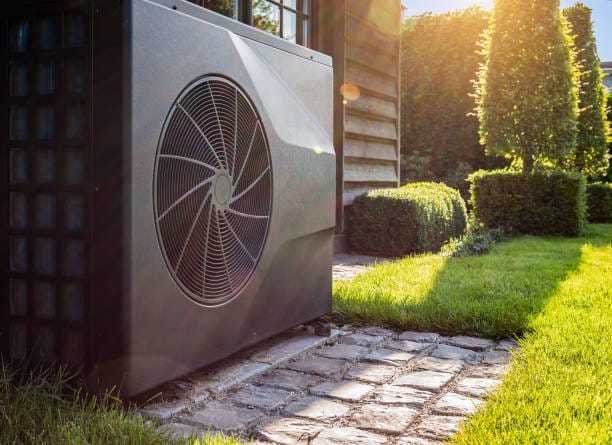
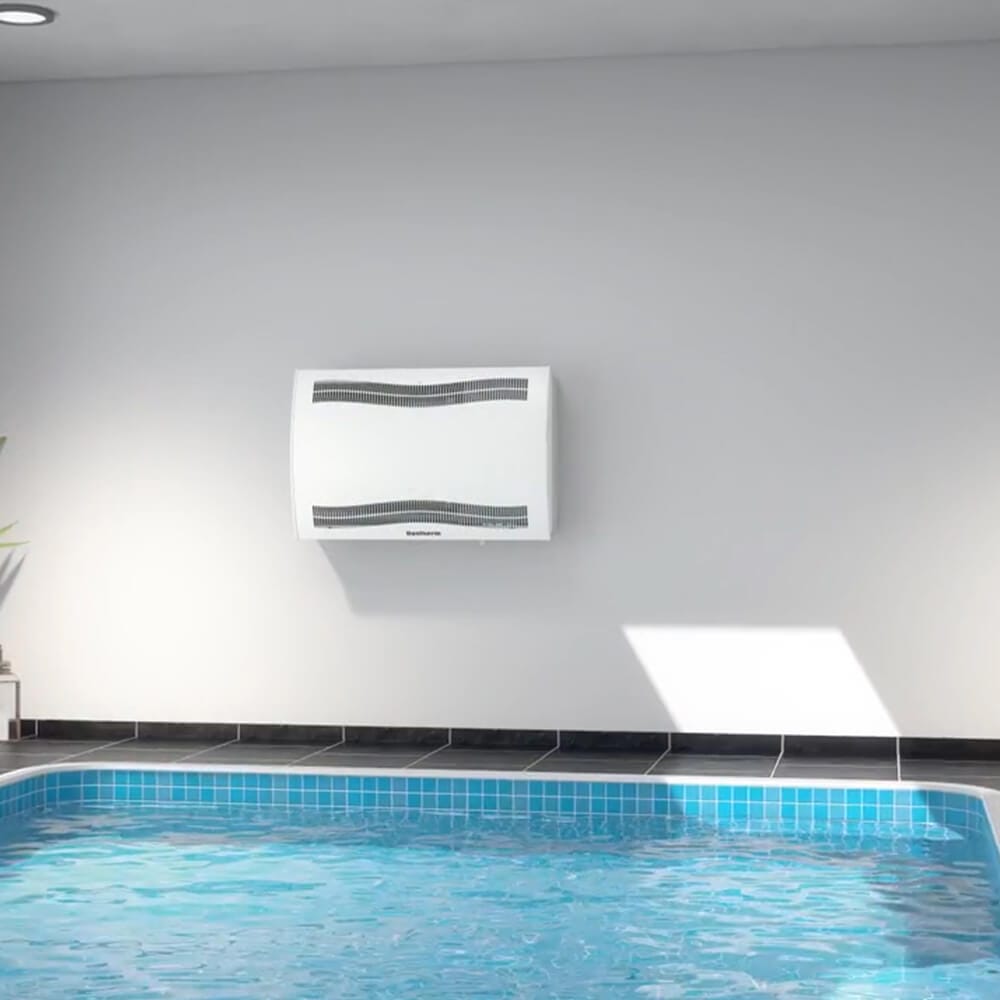
Dehumidifiers & Air Handling Units – FAQ
Warm pool water constantly evaporates into the air. If the humidity in the pool hall isn’t controlled, that moisture condenses on windows, steelwork and hidden cold surfaces. Over time this leads to peeling paint, rotting timbers, corrosion and mould, as well as a clammy, uncomfortable environment. A correctly sized dehumidifier or AHU keeps humidity in a safe range and protects the building. Use our dehumidifier calculator for an estimated calculation on how many litres a day your pool could be losing in evaporation
A good rule of thumb is to keep the air temperature about 1–2°C warmer than the pool water. That helps keep the moisture “in” the water rather than constantly evaporating into the air, which reduces humidity problems and makes the pool hall feel more comfortable. Your dehumidifier or AHU settings should be set up with this in mind.
As a minimum, we recommend a full service once a year. That usually ties in with manufacturer recommendations and helps keep warranties valid. In heavy-use commercial pools, or where the environment is particularly aggressive (high chemical load, coastal air, etc.), it can be sensible to service more frequently. Regular servicing keeps coils clean, airways clear, drains flowing and controls set correctly.
We do both. We can fault-find and repair issues with compressors, fans, controls and sensors, and we carry out F-Gas-compliant leak checks and repairs on systems that use refrigerant. If an existing unit is beyond economical repair, we’ll explain why and give realistic options for replacement rather than just recommending a new system as a first resort.
Service & Maintenance – FAQ
In most cases, once a year is the minimum we recommend. That’s usually what manufacturers expect to keep warranties valid and to make sure the system stays safe and efficient. Where systems are heavily used (for example a busy indoor pool, a commercial site or equipment running almost 24/7), more frequent servicing can be sensible. We’re happy to advise a schedule based on how your system is actually used.
Legally, F-Gas leak check frequency depends on how much refrigerant is in the system, expressed in tonnes of CO₂ equivalent, and the thresholds are set in UK F-Gas regulations. In simple terms:
Systems below 5 tonnes CO₂-eq don’t have a mandatory leak-check interval.
From 5 to <50 tonnes CO₂-eq, you must leak-check at least once a year.
From 50 to <500 tonnes CO₂-eq, checks are required at least every 6 months.
At 500 tonnes CO₂-eq or more, checks are required at least every 3 months, and fixed leak detection is mandatory.
In practice, we usually carry out an annual leak check as part of your service and advise you if your particular system needs more frequent checks under the F-Gas rules. If you’re unsure what category your equipment falls into, we can calculate it for you.
A service is planned work: we inspect, clean, test and optimise the system to prevent problems, improve efficiency and keep you compliant. A call-out is reactive: the system has already developed a fault, isn’t heating or cooling properly, or is showing an error code. Ideally, good servicing reduces the need for emergency call-outs, but we offer both.
On a typical service we will:
- Check the general condition of the unit, pipework and insulation
- Inspect electrical connections and safety devices
- Clean filters, coils and drain routes where applicable
- Check system pressures, temperatures and operating readings
- Carry out F-Gas leak checks where required
- Confirm control settings and timings are sensible for how you use the system
You’ll get clear feedback on any issues we find and practical advice on repairs or improvements.
Yes. For many customers we set up annual or twice-yearly visits, so servicing and leak checks are booked automatically. That keeps systems running efficiently, helps avoid unexpected breakdowns at the worst possible time and makes it easier to stay on top of manufacturer and F-Gas requirements.
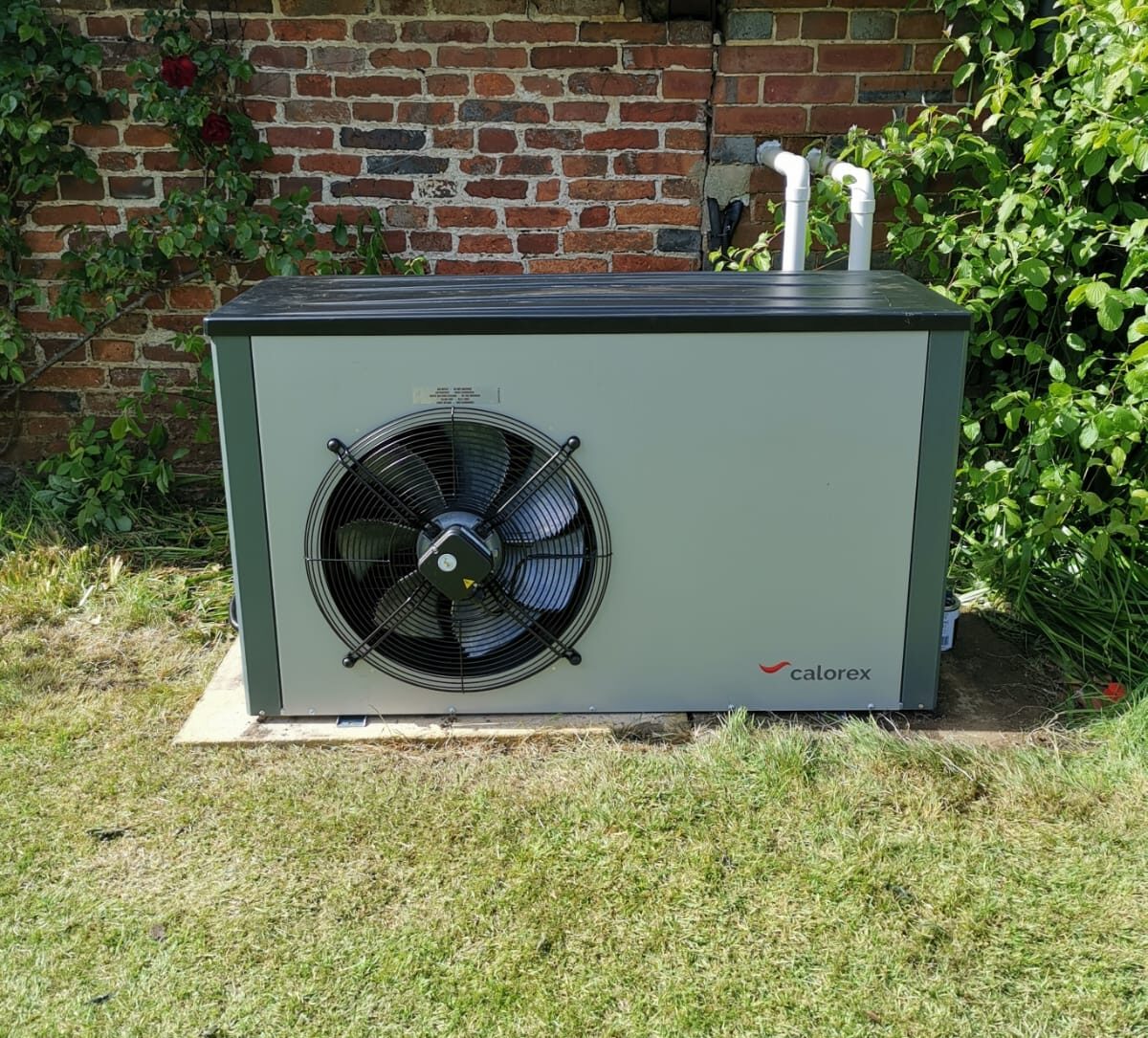
Domestic heat pumps – FAQ
We generally recommend annual servicing, following the requirements for your particular make and model. Regular checks help identify developing problems and support reliable operation.
If your equipment is under warranty, check its servicing conditions and keep your service records.
Yes. Send us the make and model, your location and any available service history so we can confirm the appropriate visit.
We offer servicing covering the heat pump and its associated hot water cylinder. Please let us know what equipment you have when booking so we can confirm the scope of the visit.
Tell us about the problem when you enquire so we can arrange a diagnostic visit where needed. Please include any fault codes, when the issue occurs and whether it affects heating, hot water or both.
Routine servicing does not include every possible repair or replacement part.
Yes. We can assess the equipment, review its available service history and explain the main heating and hot water controls.
Please make sure the heat pump, controller, hot water cylinder and any associated equipment are safely accessible. Clear belongings from the areas where we’ll be working and keep pets away from the work area.
Let us know about existing faults and previous repairs before the appointment, and have any manuals or service records available if possible.
Areas we cover
We’re based in Seaford on the East Sussex coast and cover most of East and West Sussex for heat pump, swimming pool, air conditioning and dehumidifier work.
Our core service area runs along the coast from around Hastings across to Chichester, and inland across the South Downs and surrounding towns and villages.
Typical areas we cover include (but aren’t limited to):
Seaford, Eastbourne, Brighton, Hove, Lewes, Newhaven, Peacehaven, Saltdean, Rottingdean, Shoreham-by-Sea, Lancing, Worthing, Littlehampton, Bognor Regis, Chichester, Arundel, Uckfield, Crowborough, Polegate, Hailsham, Heathfield, Haywards Heath, Burgess Hill, Hassocks, Horsham, Crawley, Bexhill-on-Sea and Hastings.
We also work in many of the smaller villages and rural locations across East Sussex and West Sussex, especially around the South Downs National Park. If you’re just outside the towns listed above, please get in touch with your postcode – if it’s practical for us to reach you, we’ll usually be able to help or at least point you in the right direction.
How can we help?
Whether you’re looking for a new system or servicing & maintenance on existing equipment, please complete the form below with as much information as possible.
It’s helpful to include:
- Details of the equipment or system
- Pool or room dimensions, where relevant
- Any existing equipment or issues
- Your location
- Your preferred timescales
We’ll review your enquiry and come back to you with the next steps.

"*" indicates required fields



Get in touch
Operating address:
23 Steyne Road, Seaford, BN25 1HA
Contact
"*" indicates required fields
